
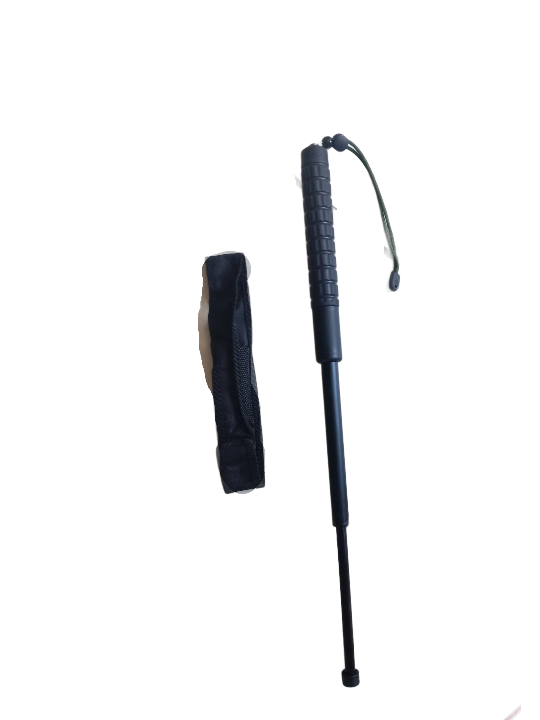
If you’re looking into extended baton training (often called “EXT baton training”), it usually refers to learning how to safely and effectively use a telescopic/extendable baton—commonly used in security, law enforcement, and personal defense contexts.
Here’s a clear breakdown of what that training involves:
What an extendable baton is
An extendable (telescopic) baton is a compact tool that expands into a rigid stick with a flick of the wrist. It’s designed for control and self-defense, not just striking.
What you learn in training
Proper training goes well beyond just swinging it. A good course typically covers:
Grip and stance – How to hold and position the baton for control and stability
Deployment & closing – Safe ways to extend and retract it without injury
Target areas – Where it is safe and legal to strike (and what areas to avoid)
Control techniques – Using the baton for leverage, restraint, and compliance
Defensive moves – Blocking, creating distance, and reacting under pressure
Situational awareness – When to use force and when to disengage
Safety and legal considerations
This is critical:
Laws about carrying and using batons vary depending on your country or region
Misuse can cause serious injury and legal consequences
Training emphasizes proportional force and de-escalation first
Who typically takes this training
Security personnel
Law enforcement trainees
Close protection officers
Civilians interested in structured self-defense (where legal)
Why training matters
Using a baton without training is risky—it’s easy to injure yourself or escalate a situation. Proper instruction helps ensure control, discipline, and lawful use.
If you want, we can point you to training options near you or explain the laws around baton use in South Africa.




Reviews
There are no reviews yet.